Source copper gas pipe for AC, Medical Gas, and Refrigeration
Compare 30 listings of copper gas pipe suitable for air conditioning, medical gas systems, and refrigeration units. Buyers can evaluate specifications like wall thickness, length, and certifications including CE and RoHS from verified manufacturers in Jiangsu and Ningbo.
Key considerations
Products List




Comprehensive Sourcing Guide
Strategic Sourcing Guide for Copper Gas Pipe Procurement
Sourcing copper gas pipe requires a rigorous approach that balances technical precision with supply chain reliability. The market for copper piping is diverse, ranging from standard air conditioning fittings to specialized medical gas lines and high-pressure refrigeration systems. Buyers must navigate a landscape where product attributes vary significantly between suppliers, often within the same category. This guide provides a structured framework for evaluating potential suppliers, understanding technical specifications, and ensuring compliance without relying on unverified claims. The objective is to equip procurement professionals with the knowledge to make data-driven decisions based on observable product facts and established industry standards.
Technical Specifications and Material Composition
The foundation of any successful copper gas pipe procurement lies in a detailed understanding of material composition and dimensional specifications. The supplied data indicates that the primary material is often cited as 99.9% Copper, with specific grades such as T2 and Tp2 appearing in product listings. These grades are critical for determining the pipe's suitability for specific pressure and flow requirements. For instance, Tp2 is frequently associated with high-purity applications, while T2 represents a standard commercial grade. Buyers must verify the exact grade listed in the supplier's technical datasheet, as the alloy composition directly influences the pipe's mechanical strength and corrosion resistance.
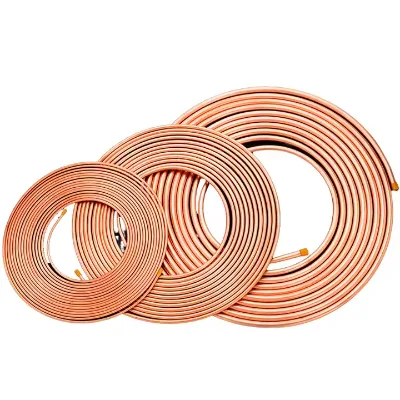
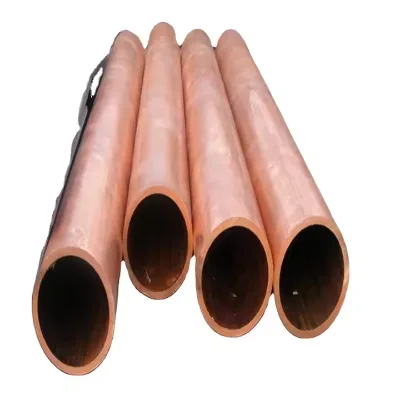
Dimensional consistency is equally vital. The observed specifications reveal a wide range of lengths, from 1 to 50 meters, and varying wall thicknesses that can range from 0.1mm to 50mm depending on the specific product model. The external diameter also shows significant variance, spanning from 3mm to 360mm. This breadth of options suggests that a single supplier may offer multiple product lines, including flexible copper pipes, straight copper pipes, and pre-insulated variants. When evaluating a product, the buyer must cross-reference the required internal diameter and wall thickness against the specific application's pressure rating. For example, a product listed with a thickness of 0.5mm to 2.0mm may be suitable for low-pressure refrigeration, whereas a thicker wall is mandatory for high-pressure gas transmission.
Furthermore, the state of the copper—whether hard or soft—determines its flexibility and ease of installation. The data notes both "Hard" and "Soft" states are available. Soft copper is generally preferred for complex routing where bending is required, while hard copper is often used for straight runs where structural rigidity is paramount. The shape is consistently described as round, which is standard for fluid transport, but the layering of the pipe is another critical variable. Some products are described as having three layers, indicating a composite structure likely designed for insulation or enhanced durability. Buyers should request a cross-sectional diagram to understand the exact construction of these multi-layered pipes.
Compliance and Certification Verification
In the realm of gas and refrigeration piping, certification is not merely a formality but a legal and safety requirement. The supplied facts highlight several recurring certifications, including ROHS, CE, ISO, and ISOTUV. The presence of these marks indicates that the product meets specific environmental and safety standards, but their validity must be confirmed on a per-shipment basis. For instance, the CE mark is a mandatory conformity mark for products sold within the European Economic Area, while RoHS compliance ensures the absence of hazardous substances.
It is crucial to distinguish between the product's claimed certification and the actual documentation provided. The data lists certifications such as "CE, ISO, RoHS" and "RoHS, ISO, CE" in different contexts, suggesting that not all products from a supplier carry the full suite of certifications. Buyers must demand a valid certificate of conformity for the specific batch being purchased. Additionally, the mention of standards like ASTM B88 and GB/T18033 provides a benchmark for quality. ASTM B88 is a widely recognized standard for seamless copper water pipe, while GB/T18033 is a Chinese national standard for seamless copper tubes for air conditioning and refrigeration. When sourcing, the buyer should verify that the product explicitly adheres to these standards or their local equivalents.
The data also references specific product standards such as "1/4, 3/8, 1/2, 5/8, 3/4, 7/8, 1, 1-1/8" and "3/8-3/4". These likely refer to nominal pipe sizes or pressure ratings. It is imperative to match these standard designations with the actual dimensions of the pipe to ensure compatibility with existing fittings and valves. Misalignment in standard compliance can lead to installation failures or safety hazards. Therefore, the procurement process must include a verification step where the supplier's test reports are reviewed against the specific standard numbers cited in the product listing.
Cost Drivers and Pricing Structures
Understanding the cost structure of copper gas pipe is essential for budgeting and negotiation. The observed price range in the market is extremely broad, spanning from $0.16 to $80,000. This vast disparity is not indicative of a single product type but rather reflects the difference between small fittings, standard lengths of pipe, and large-scale industrial orders or specialized insulated systems. The minimum order quantity (MOQ) also varies significantly, ranging from 1 unit to 5,000 units. This suggests that suppliers may offer different pricing tiers based on volume, with higher MOQs potentially unlocking lower unit costs.
Several factors drive the final price of the product. The primary driver is the raw material cost of copper, which fluctuates with global market conditions. The purity of the copper, such as the 99.9% grade mentioned, will command a premium over lower-grade alloys. Additionally, the complexity of the manufacturing process plays a role. Products with additional features, such as insulation layers, specific surface treatments, or custom shapes, will inherently cost more than standard straight pipes. The packaging method, whether it is a carton box, wooden case, or other specialized container, also adds to the overall cost, particularly for international shipping where protection against damage is critical.
Buyers should be wary of prices that seem abnormally low, as they may indicate substandard materials or a lack of necessary certifications. Conversely, extremely high prices may include unnecessary markups or over-engineering for the specific application. The MOQ is a significant cost driver; ordering below the supplier's standard MOQ may result in a higher unit price or the imposition of a setup fee. Negotiation should focus on balancing the unit price with the total order value, ensuring that the supplier can meet the delivery timeline without compromising on quality.
Typical Applications and Operational Requirements
The versatility of copper gas pipe is evident in the diverse applications listed in the product data. These range from air conditioning and refrigeration systems to medical gas lines and general ventilation. The "Air Conditioning Fitting" and "Flexible Copper Pipe" attributes suggest a strong presence in HVAC (Heating, Ventilation, and Air Conditioning) markets. In these applications, the pipe must withstand thermal cycling and pressure fluctuations. The "Fast Heating" characteristic noted in some listings may be relevant for specific heating applications, though it requires careful verification to ensure it does not compromise the pipe's structural integrity under load.
Medical gas applications represent a highly specialized segment where reliability is non-negotiable. The data explicitly mentions "Medical Gas" as an application, which implies that the pipe must meet stringent hygiene and safety standards. In this context, the "Three Layers" construction and specific certifications like ISO and CE are likely mandatory. The "Natural ventilation" and "mechanical ventilation" modes listed suggest that the pipe systems are designed to integrate with various airflow strategies, requiring precise engineering to ensure proper gas flow and pressure maintenance.
The "Warranty Period" of 2 years mentioned in the data provides a baseline for expected product longevity, but buyers should verify if this warranty covers specific failure modes such as leaks or corrosion. The "Applicable Brands" field, which lists "Current," indicates that the pipes are compatible with major industry brands, but this should be confirmed against the specific equipment being installed. Understanding the operational environment is key; for instance, pipes used in outdoor applications may require additional protection against UV radiation or extreme temperatures, which may not be covered by the standard specifications.
Supplier Evaluation and Quality Control
Evaluating a supplier for copper gas pipe requires a multi-faceted approach that goes beyond the initial product listing. The geographical origin of the products, such as Jiangsu, Changzhou, and Ningbo, China, provides insight into the manufacturing ecosystem. These regions are known for their industrial capabilities, but buyers must verify the specific factory's capacity and quality control processes. The "Customization" and "Customized" attributes indicate that suppliers are willing to tailor products to specific needs, but this flexibility must be managed through clear technical agreements to avoid production errors.
Quality control should be a continuous process, not a one-time check. Buyers should request detailed test reports that verify the chemical composition, tensile strength, and pressure ratings of the copper pipe. The "State" of the pipe (Hard or Soft) should be confirmed through physical inspection or third-party testing, as this affects the installation process. The "Color" attribute, listed as Yellow, is a standard indicator of copper, but deviations in color could signal oxidation or alloy contamination.
The packaging method is also a critical quality control point. The data lists "Carton Box," "Carton," and "Wooden Cases" as options. For international shipping, wooden cases may offer superior protection against moisture and physical damage, especially for heavy or long-length pipes. Buyers should ensure that the packaging includes moisture barriers and proper cushioning to prevent deformation during transit. Additionally, the "Delivery Time" of 15-20 days is a key logistical factor; suppliers must demonstrate a consistent ability to meet this timeline to avoid project delays.
Long-Term Procurement Considerations
Sourcing copper gas pipe is not just about the initial purchase but about establishing a long-term supply relationship. The "Warranty Period" of 2 years is a starting point, but buyers should consider the total cost of ownership, including maintenance and potential replacement costs. The "Insulated Pipe Total Length" of 3-50m suggests that supply continuity is important for large projects where consistent lengths are required. Buyers should negotiate terms that allow for partial shipments or flexible delivery schedules to accommodate project phases.
Sustainability and environmental compliance are increasingly important in procurement. The repeated mention of RoHS and CE certifications indicates a focus on environmental standards. Buyers should inquire about the supplier's recycling policies and the source of their raw materials to ensure alignment with corporate sustainability goals. The "Customization" capability allows for future-proofing, enabling the buyer to adapt the product to changing regulations or technical requirements without switching suppliers.
Finally, the "Lead Time" and "Delivery Time" must be integrated into the overall project schedule. A consistent 15-20 day delivery window is useful for planning, but buyers should have contingency plans for potential delays. Building a relationship with a supplier who can provide accurate lead time estimates and communicate proactively about any disruptions is essential for long-term success. By focusing on these strategic elements, buyers can secure a reliable supply of high-quality copper gas pipe that meets their technical, financial, and operational needs.
FAQs
What certifications do copper gas pipes typically have?
Products often carry ROHS, CE, ISO, and ISOTUV certifications. Buyers must verify that the specific batch includes valid certificates of conformity for these marks before purchase.
Which copper grades are available for gas pipe applications?
Available grades include T2 and Tp2, with material purity reaching 99.9%. The specific grade determines mechanical strength and corrosion resistance for the intended pressure requirements.
Can I find copper pipes with customizable specifications?
Yes, customization is available for dimensions and product models. Buyers should confirm technical agreements to ensure the custom features meet specific project requirements.
What is the typical delivery time for these copper pipes?
The standard delivery time ranges from 15 to 20 days. This timeline is a key logistical factor that suppliers must consistently meet to avoid project delays.
How are these copper pipes packaged for shipping?
Packaging options include carton boxes, cartons, and wooden cases. Wooden cases often provide superior protection for international shipping against moisture and physical damage.
What wall thickness ranges are offered for these pipes?
Wall thickness varies from 0.1mm to 50mm depending on the product model. Thicker walls are mandatory for high-pressure gas transmission compared to low-pressure refrigeration.
Where are these copper gas pipes manufactured?
Products originate from locations such as Jiangsu, Changzhou, and Ningbo in China. Buyers should verify the specific factory's capacity and quality control processes in these regions.